Researchers, industry leaders, and innovation partners convene to explore how collaboration, commercialization strategies, and translational research can accelerate solutions to society’s most pressing challenges
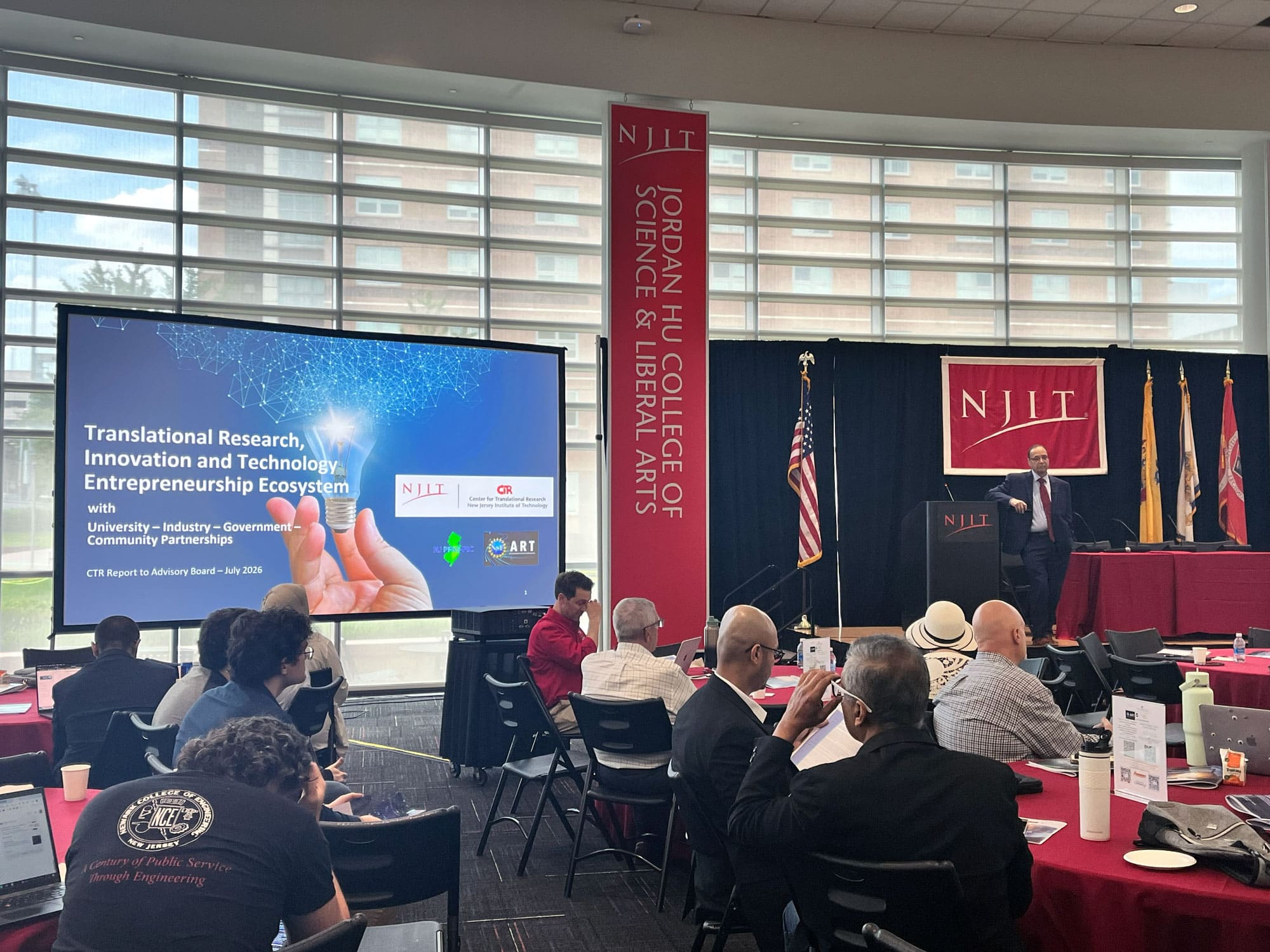
NJIT’s Center for Translational Research (CTR) hosted its 2nd badge workshop focused on building innovation ecosystems, bringing together approximately 110 participants from academia, industry, government, and the broader innovation community to discuss how research discoveries can be transformed into solutions that benefit society and drive economic growth. The event highlighted the growing importance of strengthening pathways from research to real-world impact and creating stronger connections among researchers, entrepreneurs, companies, investors, and community partners.
Opening the workshop, NJIT Chief Strategic Innovation Officer Atam Dhawan emphasized the need to accelerate the journey from academic ideas to market-ready solutions, noting the changing landscape of research funding and the importance of developing new approaches to support innovation. NJIT President Teik C. Lim highlighted the university’s role as a leading source of technological talent in New Jersey and underscored that successful innovation depends on cross-disciplinary and cross-sector collaboration. He emphasized that addressing complex challenges requires partnerships that extend beyond the university and bring together diverse expertise and perspectives.
The keynote presentation by Dr. Krishna Juluru, former FDA Digital Health Center of Excellence alumnus and White House Presidential Innovation Fellow, explored the challenges of bringing healthcare innovations from concept to adoption. Using Pear Therapeutics as a case study, he demonstrated that even groundbreaking technologies with strong clinical results must address regulatory requirements, business sustainability, healthcare delivery needs, and reimbursement challenges to succeed. Dr. Juluru emphasized several important lessons for innovators: start with real patient and user needs, engage key stakeholders early, build evidence that meets the needs of regulators, healthcare providers, and payers, protect intellectual property strategically, and develop a clear path to long-term adoption and sustainability.
The workshop also showcased several NJIT-developed technologies that demonstrate the university’s commitment to moving discoveries beyond the laboratory. Arjun Venkatesan presented PFAScan, a promising technology aimed at making PFAS detection faster, more affordable, and more accessible for environmental monitoring. The team is advancing the technology toward field deployment and commercialization through collaboration with industry partners. Additional presentations highlighted Neuron Crypto, an approach that enables secure use of artificial intelligence while protecting sensitive data, and NFAST, a nanotechnology-based drug delivery platform designed to improve the effectiveness of medicines that are difficult for the body to absorb.
The Reverse Pitch Presentation session provided a unique opportunity and learning experience into how investors make decisions about funding start-up ventures. The CEOs/Founders of four start-up companies, Charmi Chande, CEO- PFASolve Inc, Cassie Hallberg, CEO – Pure Trace Labs, Sheldon Ferreira, Co-Founder – Material Technologies, Inc, and Hai Phan, Founder of Oppy-AI presented their investment pitches seeking $1 million in virtual funds to the teams of faculty, postdocs, and students playing the role of investors to support the companies. Following the pitch presentations, investor role-playing teams interviewed each company presenter in deal-making sessions to make decisions on their virtual investments based on the company profile, technology innovation and translation credibility addressing the market need, investment and go-to-market strategies, associated risks and risk-mitigation plans, and expected ROIs. The team leaders (three of the four teams were led by undergraduate students) from the investor role-playing teams then presented their virtual investment decisions, with reasons and justifications, to the attendees, including real VCs, industry leaders, and successful entrepreneurs. Faculty and students had a tremendous learning experience about translational pathways to commercialization and obtaining investment funding.
Overall, the workshop demonstrated the critical role of innovation ecosystems in bridging the gap between research and impact. By bringing together researchers, industry leaders, entrepreneurs, and other stakeholders, NJIT’s Center for Translational Research is helping create a collaborative environment where breakthrough ideas can be transformed into technologies, products, and solutions that address pressing societal needs.
“I felt that virtual investor workshop was a great addition to the overall event because it empowered attendees to think critically about the entrepreneurs’ presentations, imagine themselves as investors making rational decisions, and then present their logic on the stage. The student investor representatives came across as thoughtful and professional, despite their young age.” – Viraj Mane, Director, Venture Studio, NJII Entrepreneurship.
“Fantastic work from faculty, student researchers, and the entire community and ecosystem in advancing not only research translation, but moving from ideation to commercialization and a lot of different research initiatives.” – Mike Brizek, VentureWell